
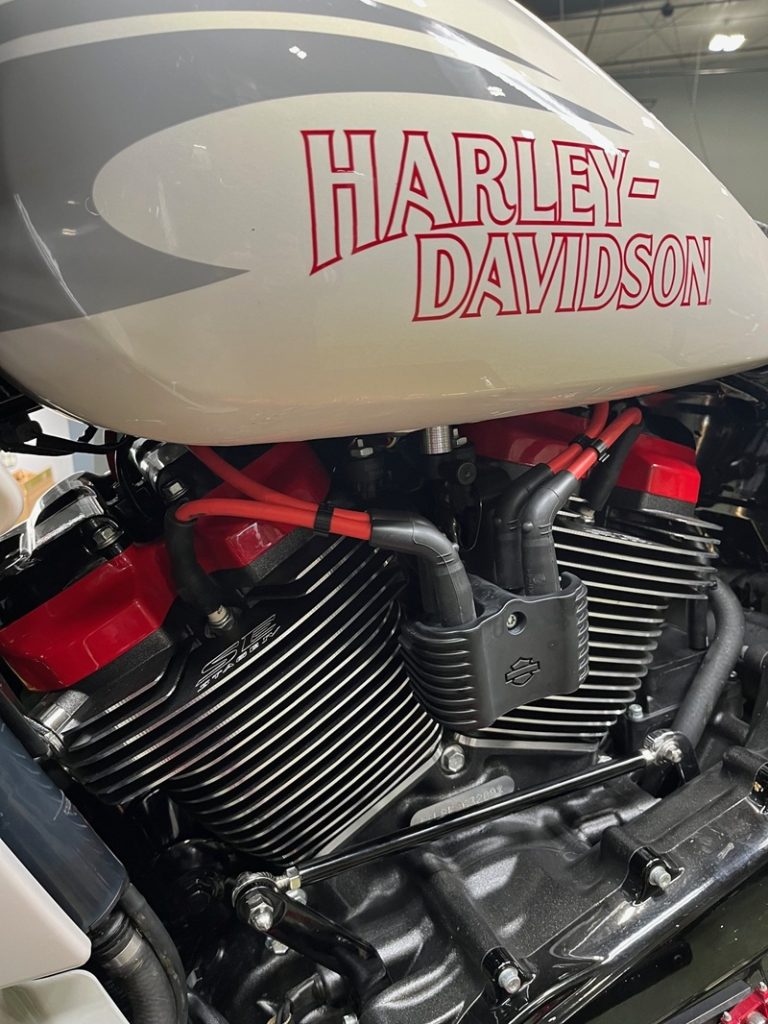
We’ve installed & dyno tested an assortment of camshafts in the Harley-Davidson Screamin’ Eagle Gen 2 SE 135 Milwaukee-8 Stage IV engine for 2024-later bikes; Here are some of the basic specs on this engine and what’s included:
- 135 cubic inches, 11.6:1 compression
- SE8-550 Camshaft
- Screamin’ Eagle Extreme CNC-ported Gen 2 Cylinder Heads
- Bore x Stroke 4.310 x 4.625
- 68mm Throttle Body & 6.8 gm/s Fuel Injectors
- CNC-machined Extreme Flow 68mm intake manifold
For reference, while the Gen 2 SE 135 shares many components with the original 2017-2023 Gen 1 SE 135 engine it’s quite a bit different, the major differences are significantly increased compression, higher flowing Gen 2 SE cylinder heads & manifold, and a larger camshaft.
Test Bike & Test Procedure
Our test bike was a 2025 Road Glide CVO ST with SE 135 engine. For testing we used the Jackpot Ripsaw 2/1 exhaust, tuning was done with Dynojet Power Vision. We started with baseline testing the engine in SE form, first with the SE Pro Street tuner, then fully tuned & unrestricted with Dynojet Power Vision PV4. We then installed and fully tuned each camshaft. The following cams were included in this test:
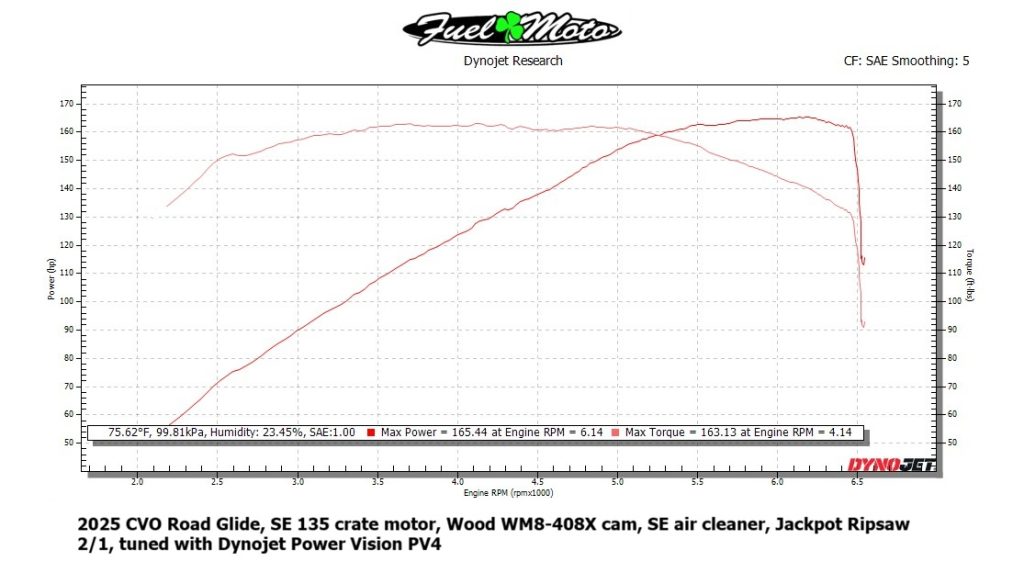
Wood Performance WM8-408X
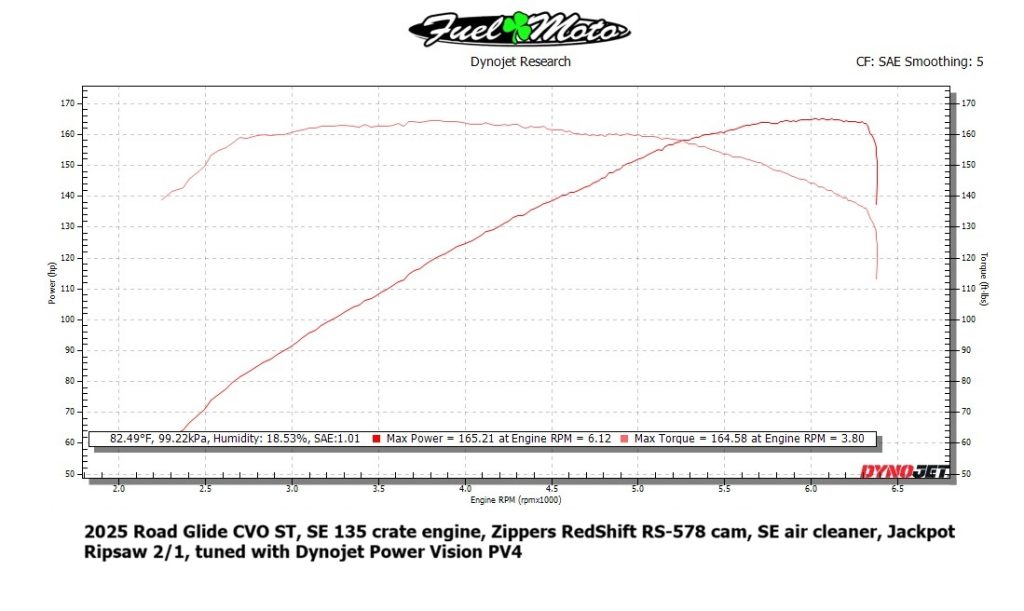
Zipper RedShift RS-578
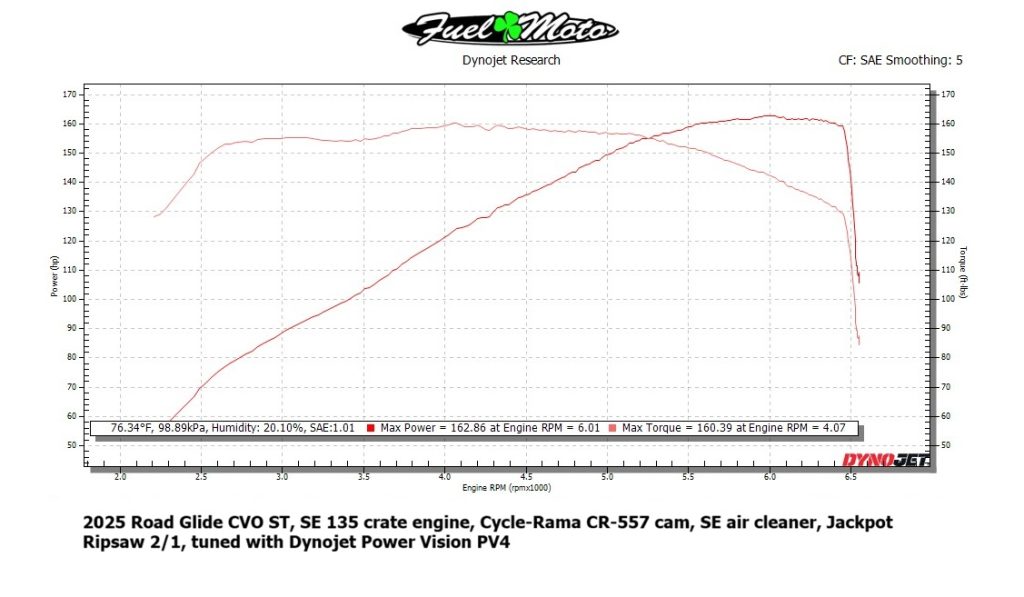
Cycle Rama CR-557
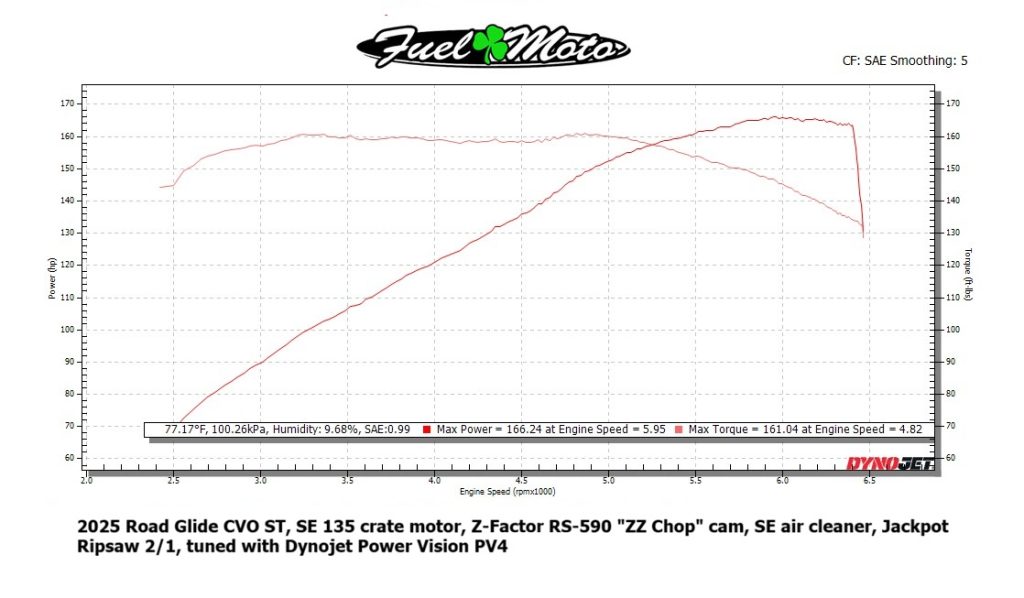
Z-Factor RS-590
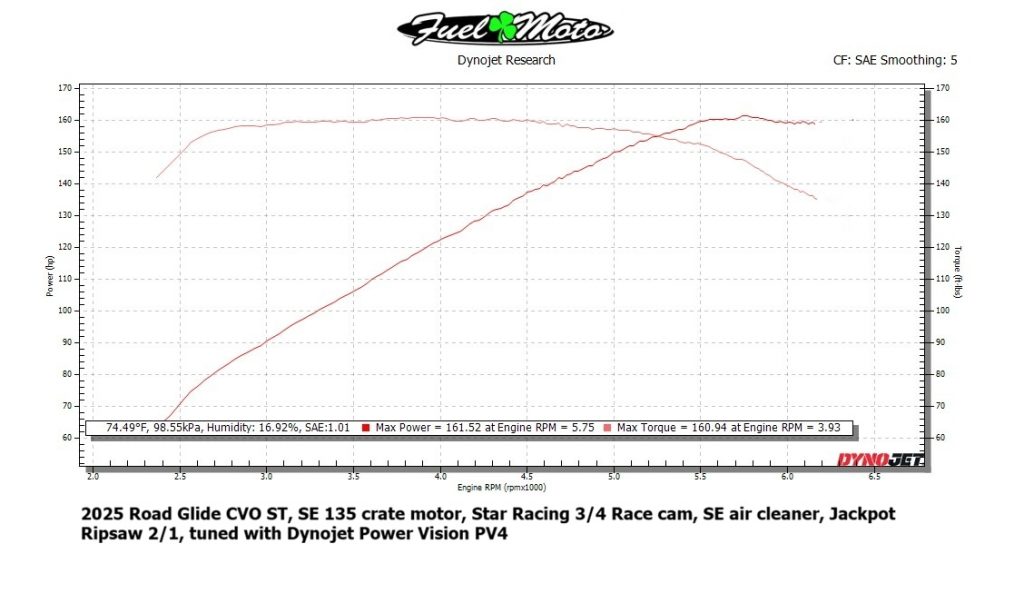
Star Racing 3/4 Race Cam
Screamin’ Eagle SE-550
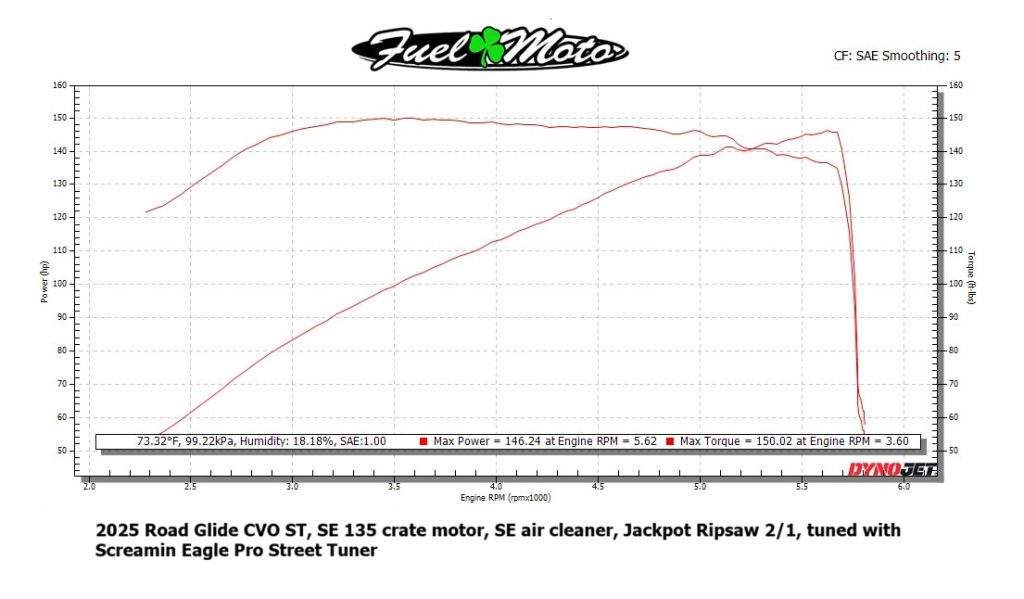
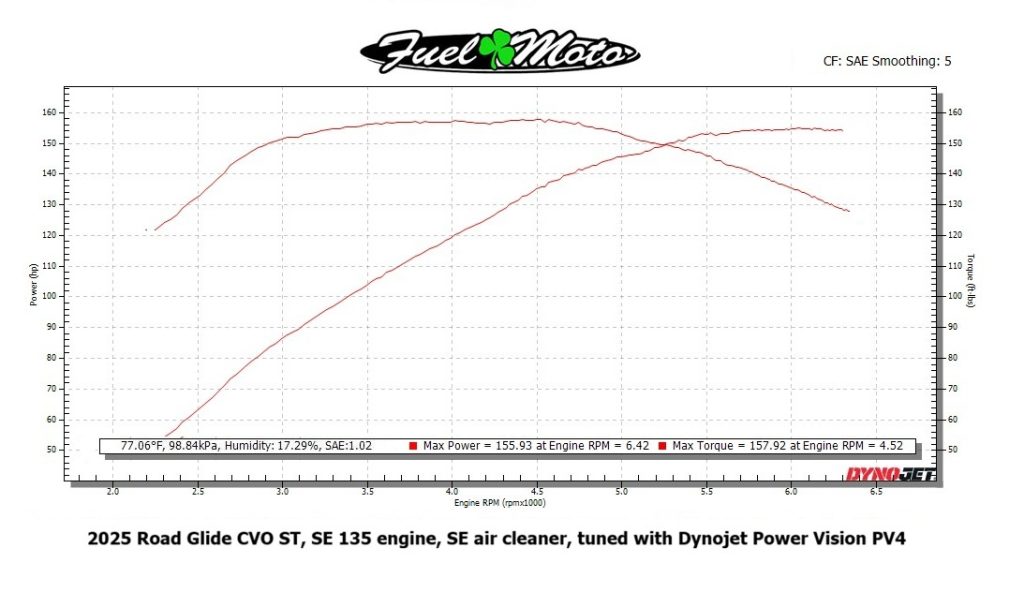
This is the standard cam that is included with the SE 135 engine. This first 2 charts were our baseline tests; Chart #1 is tuned with the Screamin’ Eagle Pro Street tuner, chart #2 is tuned with Dynojet PV4. This is the strongest big twin engine H-D has produced to date, very respectable power. Note: our baseline chart with the SE tuner is nearly identical to H-D’s advertised numbers.
Star Racing 3/4 Race Cam
This cam makes really broad power in the 135 and it comes on early. Nearly +20 more torque @ 2500 RPM than the original SE cam. Pulls very well from low RPM. Very good idle sound.
Red Shift RS-578
Excellent combination of horsepower & torque, runs very strong thru the mid-range along with the highest overall torque of the test. Great power balance. Very strong idle lope.
Z-Factor RS-590 “ZZ-Chop”
Rev’s hard, highest horsepower of the cams tested yet responds well from low RPM, this grind was aimed straight at this compression & displacement. Very aggressive, unique idle chop, hence the nickname ZZ-Chop.
Wood Performance WM8-408X
This cam is a beast in the 135. Close to the top in both horsepower & torque, we have a a lot of experience with this grind and it puts the power down very well in this application.
Cycle-Rama CR-557
Jumps up on the power early and it really rev’s fast, very responsive. Motor also feels very smooth throughout the curve. This cam also has very good idle lope.
Important Notes for this H-D Milwaukee-8 Gen 1 SE 135 Crate Engine Camshaft Test
This group of tests was conducted over a 4 week period in winter/early spring months, the conditions varied significantly which can be seen on the conditions in each dyno chart.
Additional Information
- All testing was done on the same bike using standardized dyno test procedures using SAE correction factor in a climate controlled dyno cell. Same fuel was used, and no other changes were made to the vehicle other than the camshaft.
- Results will vary based on different conditions, different components, different tuning, and different test procedures. What this means is if you have a different bike on a different day in different conditions with different parts, it’s unlikely your results will be the same as ours.
- Different parts, different results. Different components can & will affect the results for each of the camshafts tested; sometimes greatly, sometimes hugely! For example the exhaust system can completely change the overall curve and characteristics of each of the camshafts in this test.
- When comparing dyno charts, do not base your research on the single highest or best dyno chart you have found on the internet. Instead, base your info on an assortment of charts from multiple well-known, reputable sources. Its also important to understand many times the charts that are being shared are apples to oranges comparisons. Some dyno charts weren’t even created on the same brand chassis dyno. Also be sure to reference the conditions on the dyno chart. These will indicate the actual temperature, pressure, & humidity the runs were performed in, as well as the correction factor that’s being applied. The most popular and widely accepted correction factor is SAE. Some dyno operators will use STD correction, which will produce numbers several % higher than SAE. If you want to compare charts, simply ask for the chart to be displayed as SAE to compare to other SAE charts or vice versa.
- Read our article on the differences between dyno charts and tuning shops here>> https://university.fuelmotousa.com/article/the-differences-between-dyno-charts/